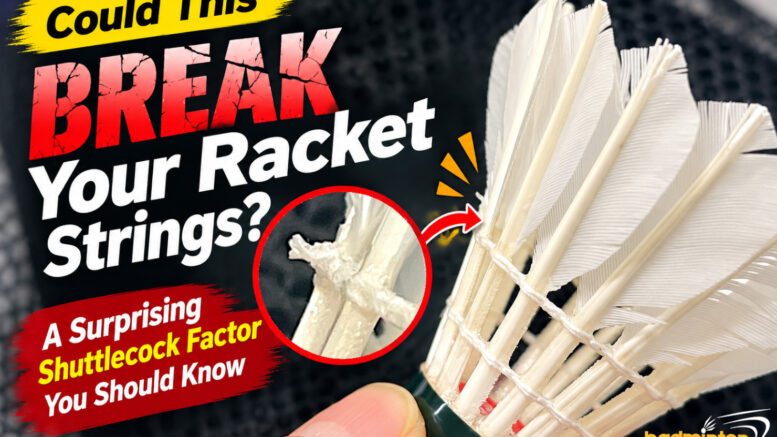
Have you ever experienced your badminton racket string suddenly snapping during a game, sometimes even shortly after restringing?
It’s frustrating, especially when you’ve invested in a good-quality string and professional stringing service.
Many players immediately blame the string quality or stringing tension. However, badminton racket strings can break for several reasons, including mishits, string wear, damaged grommets and even environmental conditions.
But here’s something you might not have considered.
Could the feather shuttlecock itself, particularly its hardened stitching threads, contribute to string damage?
Let’s explore seven possible causes of badminton racket string breakage and what you can do to make your strings last longer.
1. The sweet spot is the area of the string bed that provides the most effective and comfortable contact.
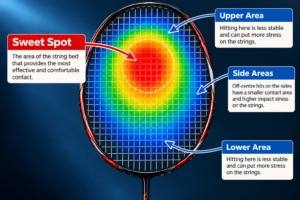
When you hit near the top or edges of the racket, the strings have less room to stretch and absorb the impact.
This creates concentrated stress on a smaller section of the string, increasing the possibility of breakage.
Even a newly strung racket can suffer a broken string from a powerful mishit.
How to reduce the risk: Work on hitting consistency and try to make contact closer to the centre of the racket’s string bed.
2. Excessively High String Tension
High string tension is popular among experienced badminton players because it can provide a firmer, more precise response.
However, higher tension also places greater stress on the strings.
For example, a racket strung at 30 lbs generally has less tolerance for off-centre impacts than the same racket strung at 24 lbs.
Higher tension doesn’t automatically mean better performance. Players who cannot consistently hit the sweet spot may experience more frequent string breakage.
How to reduce the risk: Choose a string tension that matches your playing ability, technique and racket specifications rather than simply going for the highest possible tension.
3. Thin Badminton Strings
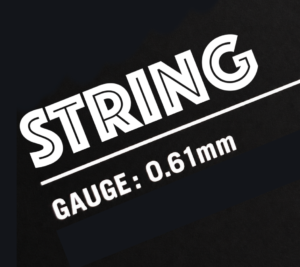
Badminton strings are available in different thicknesses, commonly ranging from approximately 0.61 mm to 0.70 mm.
Thinner strings are often chosen for their crisp hitting sensation, repulsion and responsive feel.
However, thinner strings generally have less material to withstand repeated friction and impact.
For example, when comparing strings of similar construction and material, a 0.66 mm string will usually be less durable than a 0.70 mm string.
This doesn’t mean thin strings are poor quality. They’re simply designed with different performance priorities.
How to reduce the risk: If you frequently break thin strings, consider trying a slightly thicker, more durable option.
4. Friction and Notching Between Strings
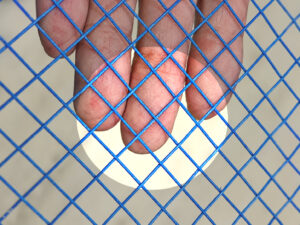
Every time you hit a shuttlecock, the main and cross strings move and rub against one another.
Over time, this repeated contact creates small grooves known as notches, particularly where the strings intersect.
As the notches become deeper, the affected string gradually loses strength.
Eventually, it may snap during an otherwise normal shot.
You can sometimes identify this wear by examining the intersection points in the centre of your racket’s string bed.
How to reduce the risk: Inspect your strings regularly. If you notice significant notching or fraying, consider restringing before a break occurs.
5. Damaged or Worn Racket Grommets
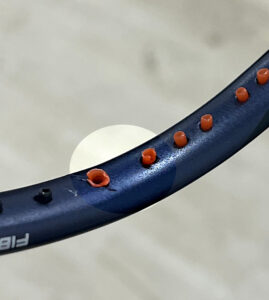
Grommets are the small plastic inserts that protect your strings where they pass through the racket frame.
Although these components may seem insignificant, they play an important role in string durability.
When a grommet becomes cracked, worn or displaced, the string may come into contact with a sharp edge of the racket frame.
Repeated rubbing against that edge can weaken or cut the string.
If your strings repeatedly break near the same grommet hole, this is something worth investigating.
How to reduce the risk: Ask your stringer to inspect the grommets whenever your racket is restrung and replace any damaged ones.
6. Could Hardened Feather Shuttlecock Stitching Damage Your Strings?
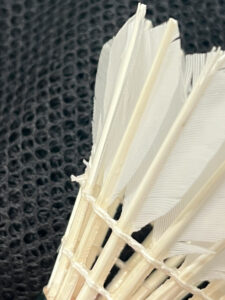
Here’s a less-discussed possibility that caught our attention at BadmintonBay.com.
Take a close look at a traditional feather badminton shuttlecock.
You’ll notice two rows of stitching thread that hold the feather shafts together and help maintain the shuttlecock’s shape.
These threads are commonly reinforced with adhesive to improve strength and durability.
In some shuttlecocks, the thread ends may protrude slightly from the feather shafts.
When coated with adhesive, these protruding ends can become relatively stiff.
Could these hardened thread ends damage badminton racket strings?
During a normal, clean hit, the racket primarily contacts the shuttlecock’s cork base.
However, during mishits, angled impacts or certain slicing shots, the feather skirt may also come into contact with the string bed.
If a hardened thread end brushes against the racket strings under sufficient force, it could theoretically cause localized abrasion or stress.
Repeated contact might contribute to wear, particularly if the string surface is already weakened.
It’s important to emphasize that this is a possible mechanism, not an established cause of badminton string breakage.
There is currently insufficient evidence to conclude that protruding shuttlecock stitching significantly increases string breakage.
Nevertheless, it’s an interesting possibility worth investigating, especially when examining damaged or poorly finished shuttlecocks.
How to reduce the potential risk: Before playing, inspect your feather shuttlecocks for unusually hard, sharp or protruding stitching threads. If you notice any hardened thread ends sticking out, gently use your fingernail to press them down or smooth the rough edges. Avoid pulling the threads, as this could loosen the stitching and affect the shuttlecock’s stability.
Important: Never use a shuttlecock with sharp, broken or excessively hardened stitching that could potentially damage your racket strings or scratch your skin. If the protruding threads cannot be safely smoothed down, replace the shuttlecock rather than risk damaging your equipment. Avoid using knives or other sharp tools to trim the stitching, as these may damage the feathers or loosen the threads.
7. String Age, Temperature and Previous Damage
Even if you rarely mishit and use moderate tension, badminton strings won’t last forever.
As strings age, repeated impact, abrasion and environmental exposure can gradually affect their condition.
Cold temperatures can also reduce the flexibility of some string materials, making sudden breakage more likely.
Additionally, small damage caused by previous racket clashes, floor contact or improper string handling may weaken a string without causing it to break immediately.
The next powerful smash may simply be the final impact that causes it to snap.
How to reduce the risk: Store your racket appropriately, avoid extreme temperatures and inspect your strings for visible wear or damage.
Does the Location of the Broken String Tell You Anything?
The position of a broken string can sometimes provide useful clues.
| Breakage location | Possible explanation |
|---|---|
| Near the top of the racket | Off-centre impact or excessive localized stretching |
| Centre of the string bed | String notching, accumulated wear or overloading |
| Near a grommet or frame hole | Damaged grommet or frame-edge abrasion |
| Repeatedly at the same location | A localized problem worth checking with your stringer |
These patterns are clues rather than definitive proof of the cause.
If your strings repeatedly break at the same location, ask an experienced stringer to inspect the racket before restringing it.
How to Make Your Badminton Strings Last Longer
Here are a few practical habits that may help:
-
Choose a suitable string tension based on your playing level.
-
Consider thicker strings if durability is your priority.
-
Improve your hitting consistency to reduce mishits.
-
Inspect strings for notching, fraying and other damage.
-
Replace worn or damaged racket grommets.
-
Check feather shuttlecocks for obvious damage or protruding hard materials.
-
Protect your racket from extreme temperatures and unnecessary impacts.
And remember, the most expensive string isn’t necessarily the most durable or the most suitable for your game.
Final Thoughts
Badminton racket string breakage is not always caused by poor string quality.
More commonly, it’s related to a combination of string tension, mishits, accumulated wear, string thickness or the condition of the racket itself.
And while hardened stitching threads on feather shuttlecocks are not a proven cause of breakage, they raise an interesting question about how the shuttlecock and string bed interact during imperfect contact.
At BadmintonBay.com, we believe understanding your badminton equipment helps you make better choices and enjoy the game with fewer unexpected interruptions.
Have you ever had a badminton string snap unexpectedly, especially shortly after restringing?
Share your experience in the comments. We’d love to hear where your string broke and what you think caused it.
Have you tried the Abroz’s high quality durable 0.68mm string? Click HERE to explore.

Be the first to comment on "Why Do Badminton Racket Strings Break? 7 Causes You Should Know"